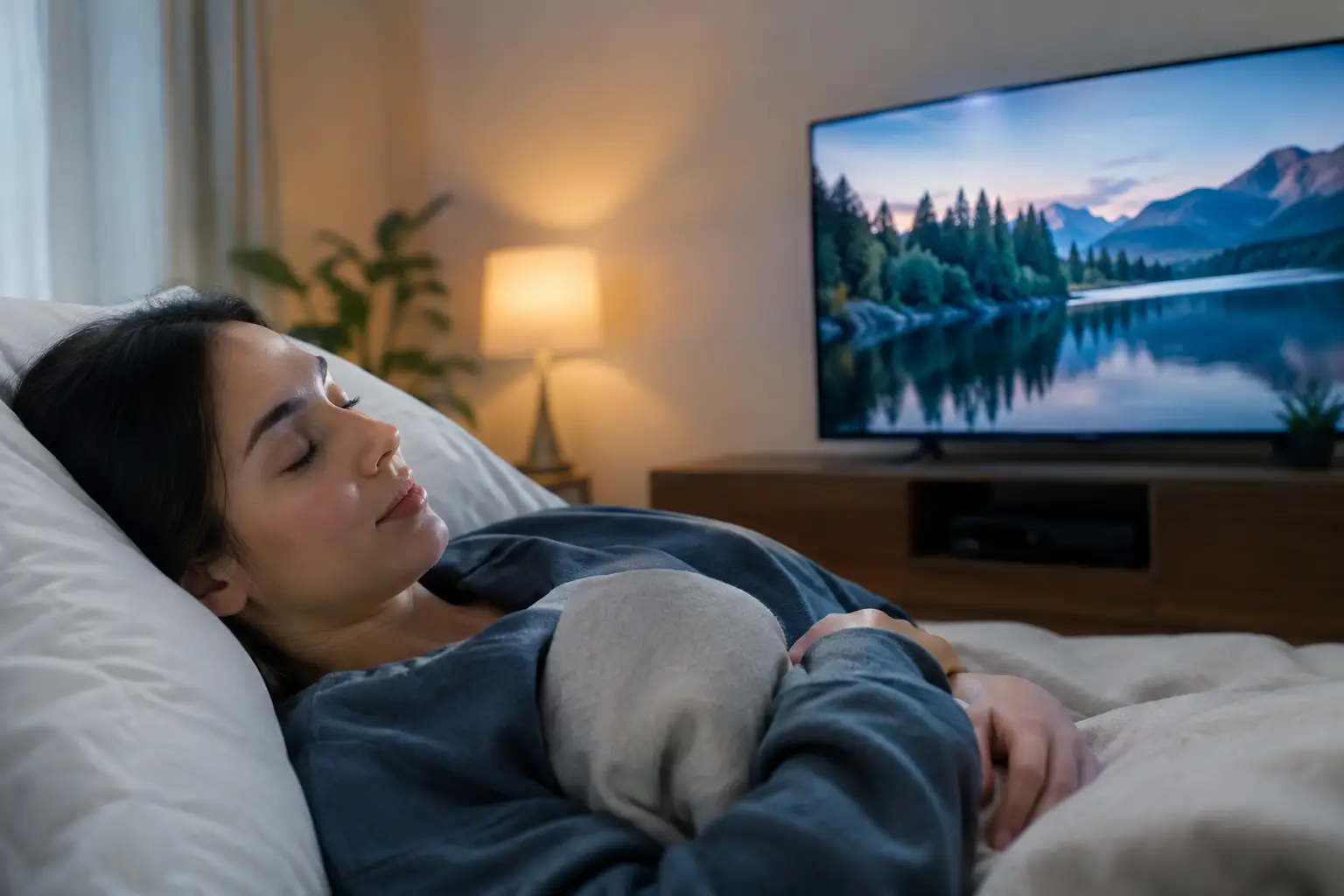
A viewer who presses play at 11:45 p.m. is not looking for the same experience as someone scrolling YouTube during lunch. They want a calm voice, a subject worth hearing, and enough visual movement to feel intentional without demanding attention. That is what makes documentaries for sleep a valuable format for faceless creators: they can earn long watch sessions by serving a real nightly habit.
Sleep content is not simply slow content. A video that is too empty feels disposable; a video packed with cliffhangers, sharp sound effects, or frantic cuts works against the promise. The productive middle ground is an educational documentary that gives the audience permission to stop watching closely while still rewarding them if they stay awake.
Why documentaries for sleep can build reliable watch time
Most YouTube formats compete for active attention. Sleep documentaries compete for trust. When viewers learn that a channel delivers a quiet, predictable experience at the end of the day, they are more likely to return, queue another video, and let a longer runtime play.
That behavior makes the format especially attractive for creators building a content library. A timely news video can spike and disappear. A well-packaged documentary about ancient trade routes, the history of maps, deep-sea ecosystems, old railways, or the science of weather can stay relevant for months or years. It can also fit into playlists built around a nightly routine.
There is a trade-off. High-energy pacing often produces stronger clicks from casual browsers, while sleep-friendly pacing can narrow the immediate audience. The goal is not to make every viewer intensely engaged every second. It is to match the viewer's intent clearly enough that the right audience clicks, stays comfortable, and comes back.
Pick subjects with low stress and lasting curiosity
The best sleep documentary topics have natural momentum without emotional volatility. They answer quiet questions, move through time gradually, or describe systems that are bigger than the individual viewer. A good test is simple: would this topic still feel pleasant if someone only heard the narration with their eyes closed?
History works well when it focuses on daily life, forgotten infrastructure, gradual civilizations, exploration, crafts, or the evolution of ordinary objects. Science works when the story is wonder-driven rather than danger-driven: astronomy, geology, animal migration, ocean currents, forests, clouds, or the mechanics of the human body. Geography, architecture, archaeology, and transportation also offer rich material with a naturally measured pace.
Avoid topics that create unwanted alertness. Graphic crime, disaster footage, conspiracy framing, aggressive debates, sudden threats, and emotionally loaded music can break the experience. Even a fascinating subject such as war history may need a gentler angle, like the engineering of ancient fortifications or the logistics behind a historic railway, rather than a sequence of battles.
A useful topic formula is a familiar subject plus a calm, specific lens. Instead of making "The History of Rome," make a documentary about how Roman roads connected distant towns. Instead of "Space Mysteries," focus on how astronomers map the night sky. Specificity gives your title a clearer promise and gives your script a calmer path.
Build the pacing before you write the script
A sleep documentary needs a structure, but it should not sound like it is constantly resetting the viewer's attention. Traditional YouTube scripts often use frequent hooks, open loops, and surprise reveals. Use those tools lightly here. A calm transition is more useful than a dramatic tease.
Start with a soft orientation: where the story begins, what the viewer will learn, and why the subject is quietly remarkable. Then move through the documentary in broad sections that follow geography, chronology, or a clear process. Let each section resolve before moving to the next one.
For example, a documentary about the history of lighthouses could move from early coastal fires to stone towers, modern optics, automated systems, and their place in coastal culture. That progression provides direction without forcing urgency.
Sentence design matters as much as subject selection. Favor clear, descriptive language over dense academic phrasing. Vary sentence length, but keep the overall rhythm steady. Reduce rhetorical questions, exclamation points, and abrupt phrases such as "but then everything changed." Those devices may increase intensity, but they also wake people up.
Fact-grounded scripts are especially valuable in this category. Viewers may be relaxed, but they still expect the channel to be credible. Verify dates, locations, names, and scientific claims. If experts disagree or a detail is uncertain, say so plainly rather than presenting speculation as fact. Calm authority creates repeat viewers.
Use audio that supports rest, not distraction
Narration is the core product. A professional voice should sound warm, measured, and natural, not overly theatrical or overly cheerful. Give the narration room to breathe, with short pauses between ideas and a pace that remains easy to follow without becoming sluggish.
Music should sit behind the voice, not compete with it. Gentle ambient beds, soft orchestral textures, and restrained atmospheric sounds usually work better than tracks with big percussion changes or sudden melodic peaks. Keep volume consistent across the full video. One unexpectedly loud transition can end a sleep session and damage audience trust.
Sound design needs restraint. A documentary about rainforests does not require constant bird calls; a video about trains does not need a whistle every time the visual changes. Use environmental audio only when it adds place and keep it low enough that the narration remains comfortable.
Before publishing, listen on headphones and on a phone speaker at the volume someone might use in bed. Check for sharp consonants, inconsistent narration levels, loud music entrances, and ads or intro sequences that feel much louder than the body of the video.
Create visuals people can watch or ignore
Sleep viewers often alternate between watching and listening. Your visuals should reward a glance without requiring one. Slow pans across archival images, gentle motion on maps, subtle zooms on landscapes, and cohesive illustrations create a cinematic feel while protecting the restful pace.
Avoid rapid cuts, flashing text, noisy animations, and frequent visual style changes. A consistent color treatment matters because it signals that the channel understands the format. Softer contrast and darker evening-friendly palettes can help, provided captions and essential on-screen details remain readable.
This is where a documentary-first production workflow saves significant time. Rather than separately researching, scripting, sourcing visuals, narrating, editing, designing a thumbnail, and writing metadata, creators can use DocuViralPro to turn a topic into a fact-grounded production package with narration, storyboard-based visuals, citations, a thumbnail, and YouTube SEO assets.
Automation does not remove creative judgment. It gives you more time to make the decisions that shape channel identity: which subjects fit your audience, how calm the narration should feel, what runtime to test, and which visual theme viewers recognize as yours.
Package the video for nighttime intent
A strong title should lead with the subject and clearly signal the use case. "The Quiet History of Ancient Roads for Sleep" tells viewers more than a vague title about relaxing history. Use the phrase for sleep naturally, but do not force it onto every upload if a related phrase such as "calm documentary" or "bedtime history" better matches the search intent.
Thumbnails should feel clear at a glance. Use one central image, restrained text, and a visual tone that matches the video. A moonlit observatory, an old map, a deep ocean scene, or a warmly lit library can communicate the experience faster than a crowded collage.
Descriptions and chapters should set expectations honestly. Mention the subject, the calm pacing, and the approximate runtime. Chapters are helpful for viewers who want a specific section, but avoid naming them with dramatic language that contradicts the restful mood.
Longer videos can work well, but length is not a substitute for quality. Test 30-, 60-, and 90-minute formats and study audience retention alongside returning viewers. Some channels succeed with a single extended documentary; others get better results by building connected episodes that viewers can queue. Your data should decide the cadence.
The opportunity is not to make viewers stay awake longer. It is to become the channel they choose when they are ready to rest. Make each upload calm, credible, and easy to return to, and your documentary library can become part of a habit rather than another video fighting for attention.